SOCAN Sues Suno as Trump's DOJ Declares AI Training 'Fair Use.' This Is Music's Biggest Legal Week Yet.
A third society sued Suno the same day Trump's DOJ called AI training fair use. Two fronts, one 24-hour window, billions on the line.
· 4 min read
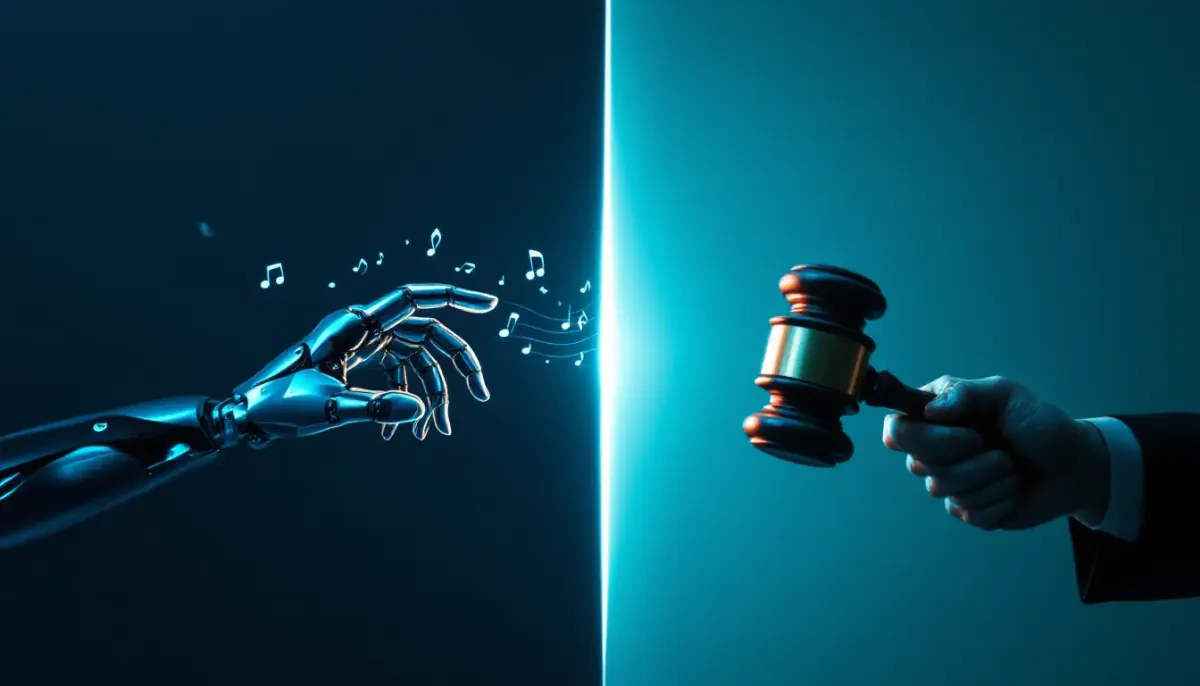
If you write, publish, or manage songs, you woke up on September 2 to two headlines that point in opposite directions. One says the courts are finally taking your side. The other says the U.S. government just handed the machines a shield. Both are true. Both landed within 24 hours of each other. And the gap between them is where your licensing revenue lives or dies.
Start with the good news, if you want to call it that. Canada's collecting society, SOCAN, filed a copyright infringement claim against Suno in the Federal Court of Canada, as Music Business Worldwide reported. That makes SOCAN the third collecting society to take Suno to court, and the first to file since one of them actually won.
The win matters. Germany's GEMA beat Suno at the Munich Regional Court on July 31, a first-instance ruling the company has said it may appeal. Denmark's Koda has a live case in Copenhagen. GEMA and Koda both went after the inputs, the copying that trained Suno's model. SOCAN is doing something different.
SOCAN is suing over the outputs. Per MBW, the claim targets the tracks Suno's platform generates and streams to users in Canada, not just the training data that made them possible. That is a smart pivot. Inputs are hard to prove without discovery. Outputs you can play, transcribe, and put side by side.
And SOCAN did exactly that. The 42-page claim lists 150 tracks it says are identical or substantially similar to songs in its repertoire, calling them "just the tip of the iceberg." Music Business Worldwide noted the note-by-note comparisons, including Joni Mitchell's "Both Sides Now," which a user allegedly recreated by feeding Suno nothing but the lyrics. The worst look might be Avril Lavigne's "Sk8er Boi," which Suno's own title reportedly called "Sk8er Boi (K-pop remix) (Avril Lavigne cover)," with some lyrics swapped into Korean.
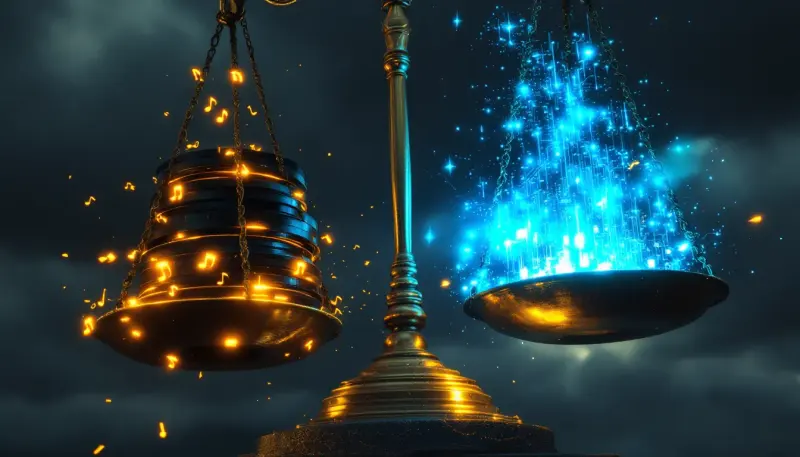
The money: SOCAN wants damages plus profits, or statutory damages of CAD $20,000 per song, which across the cited outputs comes to about CAD $2.74 million (roughly USD $2m). It is also seeking CAD $10 million (about USD $7.2m) in punitive damages for "wilful and knowing infringement." Neither number is a ceiling. SOCAN reserves the right to add songs as the case runs.
The real weapon is the second injunction. SOCAN wants a "wide injunction," a Canadian remedy built for collecting societies that would cover not just the named songs but every work SOCAN represents now or in the future. MBW described that catalog as "virtually all copyright-protected musical works in current use in Canada." If SOCAN gets it, Suno's Canadian output problem stops being 150 tracks and becomes the whole songbook.
"We do want to send a clear signal to AI services that there are consequences when they use music without permission," SOCAN's Andrea Kokonis told Billboard. She noted Suno launched in Canada in December 2023 without ever contacting SOCAN.
Now the part that should worry you
On the same day, in the same news cycle, the Trump administration walked into court on the other side. In an advisory brief filed September 1, the Department of Justice urged a federal judge to rule for OpenAI in the New York Times case, arguing that AI training is generally protected by fair use. Billboard reported it as a first-ever filing of its kind, on a question with trillion-dollar stakes.
The DOJ called training "extraordinarily transformative" and said it does not harm the market for the originals. Requiring payment, the brief argued, would "disproportionately benefit legacy media outlets" by handing them "subsidies." Read that as your catalog, reframed by the government as a legacy subsidy.

This matters far beyond one case. Every U.S. suit against Suno and Anthropic, from the majors to Round Hill's billion-dollar, rises or falls on fair use. Billboard called it the make-or-break question. The DOJ just put its thumb on the scale, and it is a heavy thumb.
The reversal is stark. Billboard pointed out that the Copyright Office said last year that ingesting "vast troves" of works to flood the market with competing content "goes beyond established fair use boundaries." Days later, the Librarian of Congress and the Register of Copyrights were both fired by the administration. Now the government's official position is the opposite of what its own copyright experts said.
Here is the tell. The DOJ's brief is about training inputs. SOCAN's Canadian claim is about outputs. That is not a coincidence, it is a strategy. The output cases live in different courts, under different law, and they do not need a friendly view of fair use to win. GEMA proved outputs can lose for Suno. SOCAN is betting Canada does the same.
Two fronts, one day. In Washington the machines got a lawyer with a badge. In Ottawa the songwriters got a plaintiff with a spectrogram. The war is not being lost or won. It is being split in two, and the smart money is on whoever picks the right courtroom.
Related: Suno v6 Is the First Real Test of Whether Licensing Can Legitimize AI Music
Sources
The Newsletter
The music business, decoded.
Join industry professionals who read our briefing on deals, royalties, and the business behind the music. No noise, no spam.