
Pophouse Bought Half of Iron Maiden, Including Eddie. That's the Part You Should Watch.
Pophouse acquired 50% of Iron Maiden's catalog plus rights to Eddie. When a catalog fund buys a character, the competition changes.
· 4 min read

If you own a heritage rock or metal act, or you manage one, or you're trying to sell one, pay attention to the mascot. Not the songs. The mascot.
Because the most interesting thing about this week's big catalog deal isn't the size or even the 50-year canon of riffs attached to it. It's that the buyer wrote a check for a cartoon ghoul.
Pophouse Entertainment has acquired a 50% stake in Iron Maiden's publishing and master recording rights, plus a stake in the band's name, image, and likeness (NIL) rights, the Swedish investment firm confirmed on July 14. Billboard reported that terms were not disclosed, and that the deal was structured over the past year with the band's co-manager Andy Taylor. BMG stays on as Maiden's publisher.
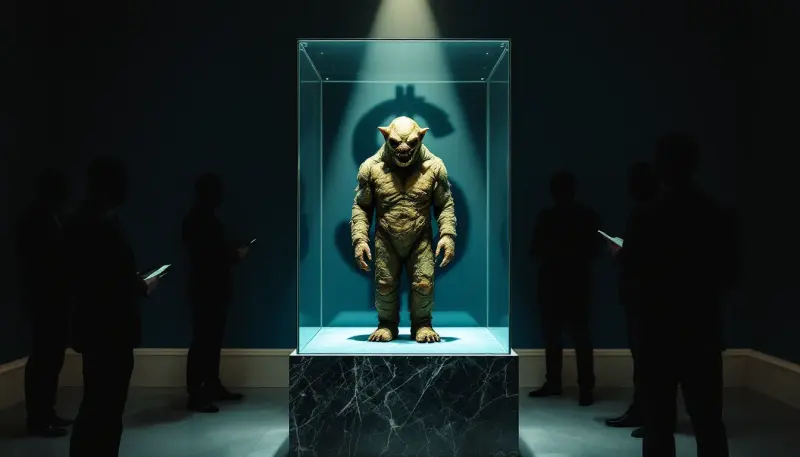
Here's the line that matters. Per Billboard, the acquisition includes a stake in the rights relating to Eddie, Maiden's ghoulish mascot, alongside trademarks, personas, and other IP covered by the NIL rights. Pophouse didn't just buy a catalog. It bought a character.
Why a mascot changes the math
Catalog investing used to be a bond-like bet. You buy predictable streaming and licensing income, you model the decay curve, you clip the coupon. The competition was other catalog buyers: the majors, Primary Wave, Hipgnosis in its day.
Pophouse is playing a different game, and Iron Maiden shows exactly what it is. This is the company behind ABBA Voyage, the London show where avatars of ABBA perform to a full room every night. Its CEO Jessica Koravos told Billboard the firm is "always thinking around the visual identity," and that "the heavy metal genre, especially with the addition of Eddie, lends itself to a treatment potentially in the world of horror."

Translate that: Pophouse is buying a franchise, not a royalty stream. And when your comparable isn't a rival music fund but a horror-IP or entertainment-IP fund, the price you can justify goes up. That's the quiet part. Catalog investors are now bidding against people who value characters, not just copyrights.
What Pophouse is actually building
The plans are already in motion. The two launched the Infinite Dreams Museum Experience, a walk-through exhibition tied to Maiden's 50th-anniversary book, during the band's EddFest weekend at Knebworth on July 10-11, Music Business Worldwide reported. They're filming the Run For Your Lives world tour for a cinematic project. And the headline plan is a digital universe built around Eddie.
Manager Rod Smallwood put it bluntly in a statement carried by both outlets: the partnership lets the band "pursue, facilitate, and finance our many plans and dreams quicker than we ever hoped," and "Eddie will rule, OK!!"
This is the KISS template. Pophouse's roughly $300 million KISS deal, per Music Business Worldwide, covered songs, NIL rights, and the artists' share of masters and publishing, and it underpins a KISS avatar show slated for 2027. Buy the identity, then build experiences off it. ABBA Voyage proved the experience can outlast the ability to tour.
The numbers under the hype
The fundamentals are real. Iron Maiden says it has sold more than 100 million records across 17 studio albums, per Music Business Worldwide, with Grammy, Brit, and Ivor Novello honors and a Rock & Roll Hall of Fame induction coming in November.
But look at where the money lives. Citing Luminate, Billboard reported the Maiden catalog averaged about 191,000 album equivalent units annually in the US over four years, with roughly 136,000 in pure album sales and about 172 million on-demand streams. Outside the US, the streaming figure jumps to 1.055 billion annually. This is a physical-buying, merch-buying, show-going, globally scaled fanbase. Streaming is the smallest part of the story.
That's the profile Pophouse wants. Koravos told Billboard they have no intention of touching the band's touring, calling the "incredible fandom" one of the catalog's main attractions. Fair enough. Free money is free money for the band, and Maiden keeps doing what it does best while someone else finances the museum and the film.
The template for everyone else
Pophouse closed a EUR 1.2 billion (USD 1.3 billion) fund in March 2025 to buy catalogs and IP, and had deployed around 30% of it across KISS, Cyndi Lauper, Avicii, and Swedish House Mafia, per Music Business Worldwide. It bought a majority of Tina Turner's music interests in March. This isn't a one-off. It's a thesis.
Fund Managing Partner Johan Lagerlöf said Iron Maiden are "one of the most powerful franchises in music history." The word is franchise. Not band, not catalog. And it points at a specific question every legacy rock and metal act should be asking now: what's your Eddie? A mascot, a logo, a visual world, a mythology fans already treat as canon. That's the asset that turns a decaying royalty curve into a story you can sell forever, and this is part of the same private-equity gravity now reshaping catalogs worldwide.
The songs were always the point. Now the ghoul is worth more than half of them.
Related: Too Lost's First Acquisition Lands in Brisbane, and It Tells You Where the Money Is Going
Related: Miley Cyrus Just Left Sony for Warner's Atlantic. That's a Roster Coup You Should Read Closely.
Related: Spotify to the Majors: We Don't Need All of You to Launch AI Remixing
Related: The LA Jazz Festival Vanished on Opening Day. If You Booked It, Read the Fine Print.
Related: Suno's BMG Deal Just Wrote the Opt-In Playbook. Your Artists Now Hold the Veto.
Sources
The Newsletter
The music business, decoded.
Join industry professionals who read our briefing on deals, royalties, and the business behind the music. No noise, no spam.